Exploring the M50 Engine: What Distinguishes This Iconic Powerhouse from the Rest?
The iconic M50 engine, a benchmark of BMW's automotive craftsmanship, has carved a niche in the annals of automotive engineering since its launch in the beginning of the 1990s. Its blend of performance, efficiency, and groundbreaking engineering has fascinated both general motorists and hardcore performance aficionados without distinction. Still, what genuinely sets apart the M50 from other engines in its class? Examining its distinctive features and practical uses uncovers an intricate story that goes beyond mere numbers.
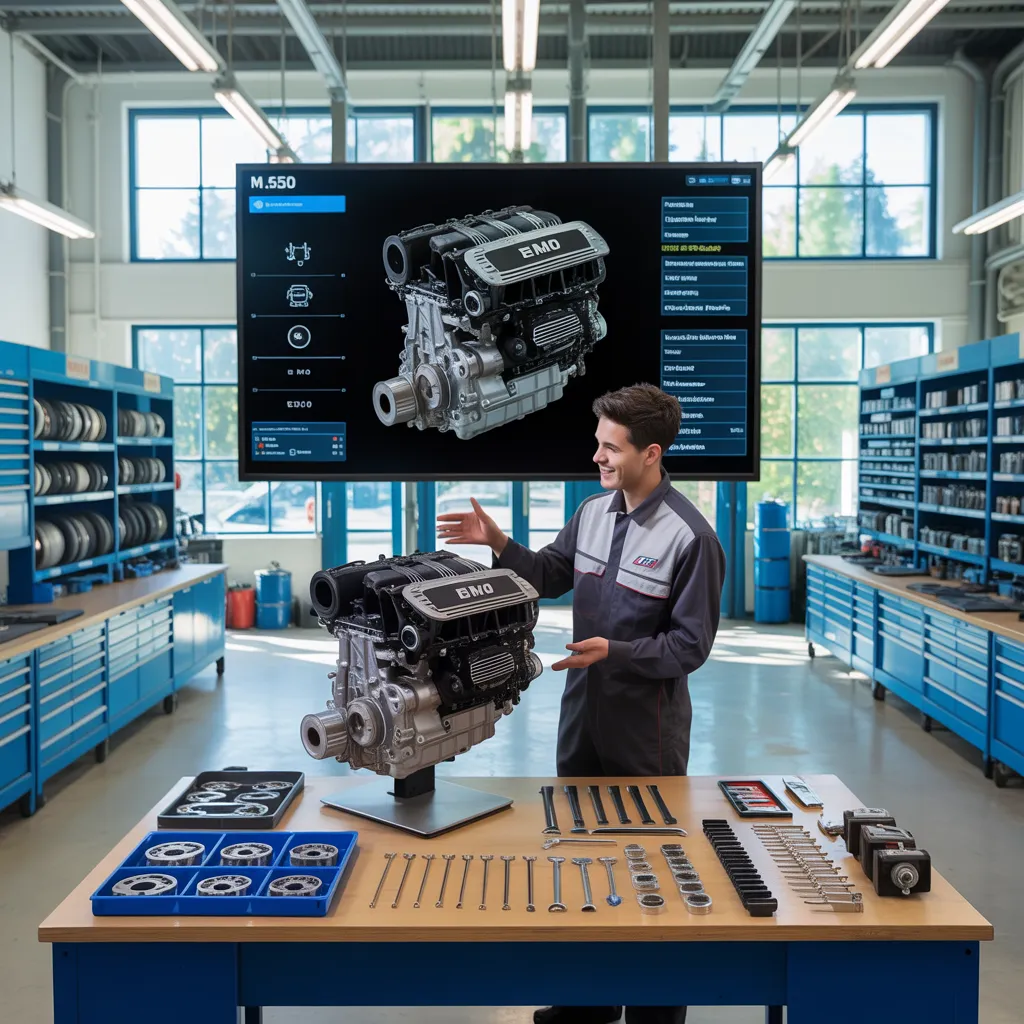
The Enduring Legacy of the M50 Engine in Automotive History
The M50 engine , a cornerstone of BMW's engineering history, has profoundly impacted automotive performance and design since its introduction in the early 1990s. Well known for its inline-six design, the M50 combined smooth operation with impressive power delivery, defining the benchmark for its category. This engine marked a shift towards greater technological efficiency, incorporating an aluminium construction and a DOHC design that improved both longevity and power output.
The BMW M50's advanced engineering attributes, such as its variable valve timing system, were instrumental in establishing its recognition for durability and driving precision. It served as the driving force for numerous BMW models, from the 3 Series to the Z3, leaving a lasting impact on BMW's lineup. Automotive enthusiasts celebrated the M50 for its exceptional performance as well as its tuning potential, which fostered a thriving network of performance enthusiasts. Consequently, the M50 engine is widely regarded as a revered testament of BMW's commitment to performance-driven engineering and design excellence throughout automotive history.
Core Specifications: What Sets the M50 Apart?
Engine specifications reveal the M50's unique qualities that distinguish it from its contemporaries. This six-cylinder engine boasts a displacement of 2.5L, providing a harmonious blend of performance and fuel economy. Importantly, the M50 features a DOHC (dual overhead camshaft) design, optimizing airflow and boosting output at high revs. With an output of approximately 189 horsepower and 170 lb-ft of twisting force, it delivers impressive acceleration and dynamic responsiveness.
The M50 additionally features a highly refined Bosch Motronic engine management system, optimizing fuel delivery and ignition timing for superior efficiency. Its aluminum construction contributes to a lightweight profile, additionally improving handling and performance. Additionally, the engine's notably reduced gravitational center improves vehicle stability, making it a popular option among performance-minded drivers. These attributes highlight the M50's reputation as a well-rounded powerplant, delivering a fusion of durability and dynamic driving pleasure that resonates with both everyday motorists and dedicated enthusiasts equally.
M50 Performance Breakdown: How Does It Compare?
Upon examining the M50 engine's output, essential factors encompass power production, torque behavior, and overall efficiency. Comparing these factors against alternative engines will underscore the M50's strengths and weaknesses. The purpose of this evaluation is to offer a detailed understanding of its market standing in the market.
Power Production Comparison
Power output serves as a crucial benchmark in assessing the performance of the M50 engine against its competitors. The M50, known for its robust engineering, typically delivers between 140 to 200 horsepower, according to the specific model and tuning setup. This power band establishes it as a strong contender in its category, often surpassing similar engines from rival manufacturers. For instance, when measured against the popular inline-four engines, the M50's power output delivers a considerable benefit, facilitating superior acceleration and greater overall capability. Additionally, the engine's design allows for a fluid power transmission, improving the overall driving feel. Overall, the M50 sets itself apart not just for its raw power figures but also for its ability to translate that power into engaging, capable performance during everyday use.
Torque Performance Analysis
When assessing the torque characteristics of the M50, it is clear that this engine demonstrates outstanding performance figures compared to its rivals. The M50 is engineered to provide powerful torque over an extensive RPM band, resulting in superior handling and response. This characteristic allows for effective acceleration, especially during mid-range output, a key aspect for daily commuting and high-performance driving. Stacked up against similar engines in its class, the M50 often outperforms them in terms of top torque figures, bolstering its status as a dynamic powerplant. Furthermore, the engine's smooth torque curve guarantees reliable power output, rendering it a popular selection for both enthusiasts and daily drivers, additionally cementing its standing in the competitive market.
Productivity Metrics Analysis
The M50 engine stands out in torque characteristics and additionally exhibits commendable efficiency metrics that enhance its overall appeal. With an enhanced fuel consumption rate, the M50 distinguishes itself among competitors, offering a harmony between performance and fuel savings. When measured against rivals, the M50 offers superior thermal efficiency, resulting in diminished emissions and decreased operational costs. Its advanced fuel injection system contributes to precise combustion, optimizing power delivery while reducing inefficiency. Furthermore, the engine's lightweight design aids in enhancing fuel efficiency, rendering it an ideal option for both driving enthusiasts and environmentally aware motorists. Overall, the M50 engine's efficiency figures cement its standing as a premier powerhouse in the automotive world, showcasing innovation and practicality.
What Advancements Enhance the M50's Performance?
Groundbreaking innovation drives the M50's engineering advancements, establishing a new standard in the auto industry. Innovative features such as advanced fuel injection systems and turbocharging substantially improve the motor's efficiency and power generation. The integration of high-strength lightweight composites reduces overall weight, contributing to improved acceleration and handling. Moreover, a state-of-the-art digital control module adjusts engine settings instantaneously, guaranteeing optimal performance in all driving situations.
The M50's construction also integrates advanced thermal management solutions, which assist in maintaining peak performance during prolonged operation. Improved combustion mechanisms lower emissions without compromising power output and torque. Additionally, the engine's adaptable structure allows for easier upgrades and maintenance, providing flexibility for upcoming developments. Collectively, these breakthroughs establish an engineering marvel that not only achieves remarkable performance benchmarks but also establishes an ecological benchmark in contemporary engine engineering. The M50's innovations demonstrate how state-of-the-art engineering can transform vehicle performance.
How Does the M50 Engine Perform in Real-World Applications?
The M50 engine showcases its versatility through its applications in both competitive racing and daily use. In motorsport, its performance improvements give drivers with the strength and precision needed for intense racing scenarios. In contrast, in everyday driving, the motor offers a blend of performance and reliability, making it a popular choice among everyday motorists.
Motorsport Performance Enhancements
Harnessing its robust design and flexible performance, the M50 engine has established itself in numerous motorsport applications. This engine thrives in both amateur and professional racing circuits, offering reliability and tunability that racers and crews value. Its lightweight construction and efficient airflow improve acceleration, making it a popular choice for circuit racing and drifting. Enhancements such as turbo installations and upgraded intake setups further amplify its horsepower, delivering a racing advantage on the racetrack. Moreover, the engine's adaptability allows for installation in varied platforms, from circuit cars to rally machines. In summary, the M50's established capabilities and tuning flexibility solidify its status as a highly regarded engine among motorsport racers seeking to optimize their on-track performance.
Everyday Driving Experiences
A large number of drivers recognize the M50 engine for its blend of performance and practicality in everyday settings. The smooth acceleration and responsive handling of this engine make it perfect for city commuting, where quick maneuvers are often required. Its ability to maintain efficiency without sacrificing power allows drivers to enjoy spirited drives while managing fuel economy.
In addition, the M50 engine can be found across a wide range of models, from coupes to sedans, ensuring versatility across different driving styles. Its sturdy build provides reliability, positioning it as a top choice for drivers who prioritize vehicle longevity. In day-to-day operation, the M50 engine maintains harmony between dynamic driving experiences and everyday driving requirements, establishing its legacy among everyday motorists.
Common Enhancements for the M50 Motor Power Gains
Enhancing the efficiency of the M50 engine involves multiple well-known modifications that hobbyists commonly seek out. A well-regarded enhancement is the addition of a cold air intake system, which increases airflow, leading learn the details to enhanced fuel combustion and increased horsepower. In addition, many opt for performance headers, which enhance exhaust gas movement and reduce backpressure, further amplifying engine efficiency.
One other widely favored modification is reprogramming the ECU, allowing for optimized fuel delivery and ignition timing tailored to aftermarket components. Enhancing the exhaust system is likewise a popular option, as a higher-flow system can considerably boost both sound and performance.
Furthermore, car enthusiasts regularly consider installing aftermarket camshafts, which can boost power delivery across all RPM levels. As a whole, these upgrades not only improve the M50's performance but also contribute to a more exhilarating experience for the driver, positioning it as a preferred selection among car enthusiasts aiming to unlock the engine's true capabilities.
Why Car Enthusiasts Are Obsessed With the M50 Engine?
Why do automotive enthusiasts flock to the M50 engine? This legendary engine, engineered by BMW, appeals to passionate drivers due to its mix of performance, durability, and customization potential. The M50's six-cylinder arrangement delivers smooth power delivery and robust torque, making it a top choice for road and racing use. Its simple engineering allows for easier maintenance and modifications, drawing in self-sufficient mechanics.
Additionally, the M50 engine offers a solid aftermarket support, providing a wide range of options for modifications, from turbo kits to performance intakes. This capability allows automotive hobbyists to tailor their vehicles to their specific preferences, whether they want daily drivability or race-ready performance. Furthermore, the M50's reputation for longevity ensures that it can endure the challenges of demanding applications. Collectively, these qualities solidify the M50 engine's status as a beloved choice among motor enthusiasts, cultivating a dedicated community around it.
Questions You May Have
Which Vehicles Originally Came Equipped with the M50 Engine?
The M50 powerplant originally featured in various BMW models, including the 325i and 525i during the 1990s. Its versatility allowed it to be utilized in sedans as well as sports cars, boosting performance across the entire range.
How Does the M50 Hold Up Against More Modern Engines?
The M50 motor, while respected for its reliability and performance, falls short of the technological progress and efficiency found in modern engines. Developments in forced induction, fuel injection, and hybrid powertrains have considerably boosted output and economy in contemporary automobiles.
How Long Does an M50 Engine Typically Last?
The typical lifespan of an M50 engine spans between 200,000 and 300,000 miles when properly maintained. Factors such as driving habits, maintenance frequency, and operating conditions greatly influence both its longevity and performance.
What Are the Common Problems With the M50 Engine?
Frequent problems with the M50 engine involve VANOS unit malfunctions, oil leaks, and cooling system failures. Many owners frequently experience issues associated with intake manifold gasket failures and wiring harness deterioration, affecting the engine's overall reliability and performance.
What Is the Cost of Maintaining an M50 Engine?
The upkeep expense for an M50 engine generally falls from $300 to $1,000 annually, based on considerations like usage, required repairs, and whether routine services or major overhauls are needed for optimal performance.